The Nature of Southborough: Battling Invasives

The latest in Southborough Open Land Foundation's contributed series.

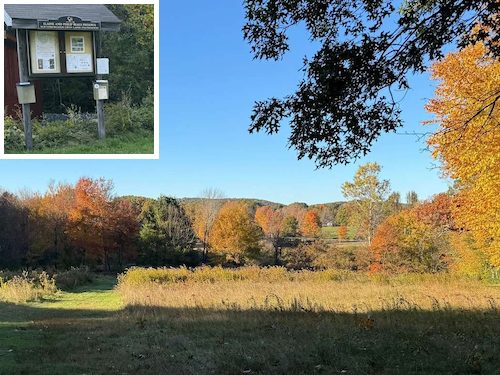
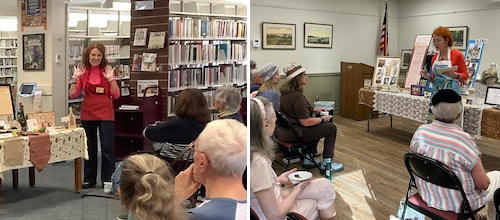
Above: SOLF’s Debbie Costine and the St. Mark’s Community Engagement Crew took on invasive plants that are causing issues at Beals Preserve (images cropped from contributed photos)

[This post is part of a special guest series focused on appreciating nature in Southborough, contributed by the Southborough Open Land Foundation (SOLF), a non-profit dedicated to preserving and stewarding natural resources here in town.]

This month, SOLF invited a group of volunteers from St. Marks School to write about their experience working with SOLF on efforts to combat invasive species at Beals Preserve.]1 Below is what they shared. . . 


Debbie Costine and the St. Mark's Community Engagement Crew (contributed photo)This spring, my students and I had the pleasure of working with Debbie Costine and the Southborough Open Land Foundation (SOLF) to learn more about Beals Preserve and the conservation work at the heart of SOLF’s mission. In preparation for our project, Debbie identified a group of native blueberry bushes that were under attack by several invasive plant species.

Many of the invasive species we encountered become beautiful plants when they flower; indeed, these species often make their way to our local ecosystem because people plant them for ornamental and decorative purposes. However, these plants also spread rapidly, often choking out native plants, which provide much needed ecological diversity to support the animals, insects, and other plants in our area.

For five Thursdays in April and early May, my students, Debbie, and I worked together to cut back the invasives so that the Native Highbush Blueberries could flourish. While we weren’t able to work through the entire line of blueberry bushes, we made good progress – and had a great time learning about the importance of keeping invasive species in check! Reach out to SOLF if you’d like to get involved in this project. It’s hard work…but a great deal of fun, too! — Christina Kopp

Native Blueberry Bushes on First Day (contributed photo)

Above: The native blueberry bushes on our first day of work (contributed photo – click to enlarge)

Below, my students have detailed four invasive species we encountered while tending the blueberry bushes:

Asiatic Bittersweet
An Asiatic bittersweet is an invasive woody vine native to Korea, China, and Japan. The invasive plant is characterized by its glossy green and yellow leaves with small fruits that, when they open, reveal a bright red or orange berry. My experience with Asiatic bittersweet vine was a challenging yet rewarding one. When I first went to cut down the vines, I did so with ease, but when I tried to pull them off the tree, I realized they were too tightly twisted around the branches. I then decided to cut them into smaller pieces and began disentangling the branches from (the vine). Once I got into a routine, I had a lot of fun and felt accomplished seeing all the trees be free from the invasive vine. The rewarding feeling was something I felt every day working at Beals Preserve. I cherished working and learning about plants that I otherwise would not have known about. My experience at Beals Preserve encouraged me to connect with nature and build a place where a community can gather. — Jada Alford

Jada enjoying Beals Preserve (contributed photo)

Above: Jada enjoying Beals Preserve

Multiflora Rose (contributed photo)

Above: Multiflora Rose (contributed photo – click to enlarge)

Multiflora Rose
The multifloral rose was introduced from the east coast of Japan in 1866. This species is very thorny with arching stems, and from experience they do get in the way. They reproduce by seed, and on estimate they produce a million seeds per year. Since there are so many of them, they can cause multiple problems. For example they can invade open woodlands, forest, meadows, etc. They choke pastures, and are extremely difficult to eradicate. During my time at Beals Preserve, I’ve gone to war with this species. Thorns going through my pants, latching on to me, even got a battle scar on my leg from one of them. They are not fun to deal with, but at the end of the day we had to fight through them to help the healthy greenery around them.  Bleu Kerr

Bleu battling the invasives (contributed photo)

Above: Bleu battling the invasives (contributed photo – click to enlarge)

Japanese Knotwood
The Japanese Knotweed was initially brought to the United States from eastern Asia as a garden plant. This herb can grow up to 10 feet tall with heart-shaped leaves and white flowers in late-summer to early autumn. Knotweed foliage and roots are so dense that no other plants can grow there. It is important that these plants are dug up by the root so they do not continue to be invasive to other plant species. (However, it is nearly impossible to remove the roots!) When we first found it at Beals Preserve, I found it really fascinating because it looked like bamboo out of its sprouting season. I never really found any challenges with it, for it is extremely light weight and hollow.  Katie Barrett

Katie using a pruning saw (contributed photo)

Above: Katie using the pruning saw (contributed photo – click to enlarge)

Asian Bush Honeysuckle
The Asian Bush Honeysuckle is a shrub that can grow to approximately 12 ft. It was originally introduced as an ornamental shrub. However, they quickly became invasive because birds ate the berries, spreading the seeds throughout much of the U.S. Having spread to at least 38 states, the bush honeysuckle might be one of the most invasive plants in the U.S. While pruning the blueberry bushes, I came across a particularly hard-to-cut branch, so I followed it to the base and discovered it was not part of the blueberries but a honeysuckle growing right next to the blueberry. As its trunk was too thick to cut with the loppers, I had to use the pruning saw to saw it down and untangle the branches. I really like working at Beals Preserve because it gives me a chance to learn about the state’s ecosystem, which I am unfamiliar with. The difference between a deciduous forest and a chaparral biome (as found in San Diego, my hometown) is immense, and having the opportunity to learn and interact with both is amazing. — Ellie Cohen

Ellie and the honeysuckle (contributed photo)

Above: Ellie after successfully cutting down the invasive honeysuckle (contributed photo – click to enlarge)

Want to learn more about SOLF, or volunteer or donate?  Check out our site, we’d love to hear from you.

Debbie Costine (a SOLF Trustee, artist and curious naturalist)
SOLF – Southborough Open Land Foundation

Update on Grafted Roots CSA & Shop at Chestnut Hill Farm

CSA signup has reopened. An online farmstand is open. And farmers are still hiring for help.

Earlier This summer, I shared news about a new CSA (Community Supported Agriculture) launched at Southborough’s Chestnut Hill Farm.

I checked in on the fledgling “Grafted Roots” enterprise run by local growers who are leasing the farm’s fields. They had updates to share on the CSA and shopping options. Read the full article → from Update on Grafted Roots CSA & Shop at Chestnut Hill Farm

  • © 2026 MySouthborough.com — All rights reserved.